Tilt in poker: recognising the signs and knowing when to stop
Understand poker tilt, distinguish decisions from results, recognise loss-chasing and find support without treating a short break as a guaranteed reset.
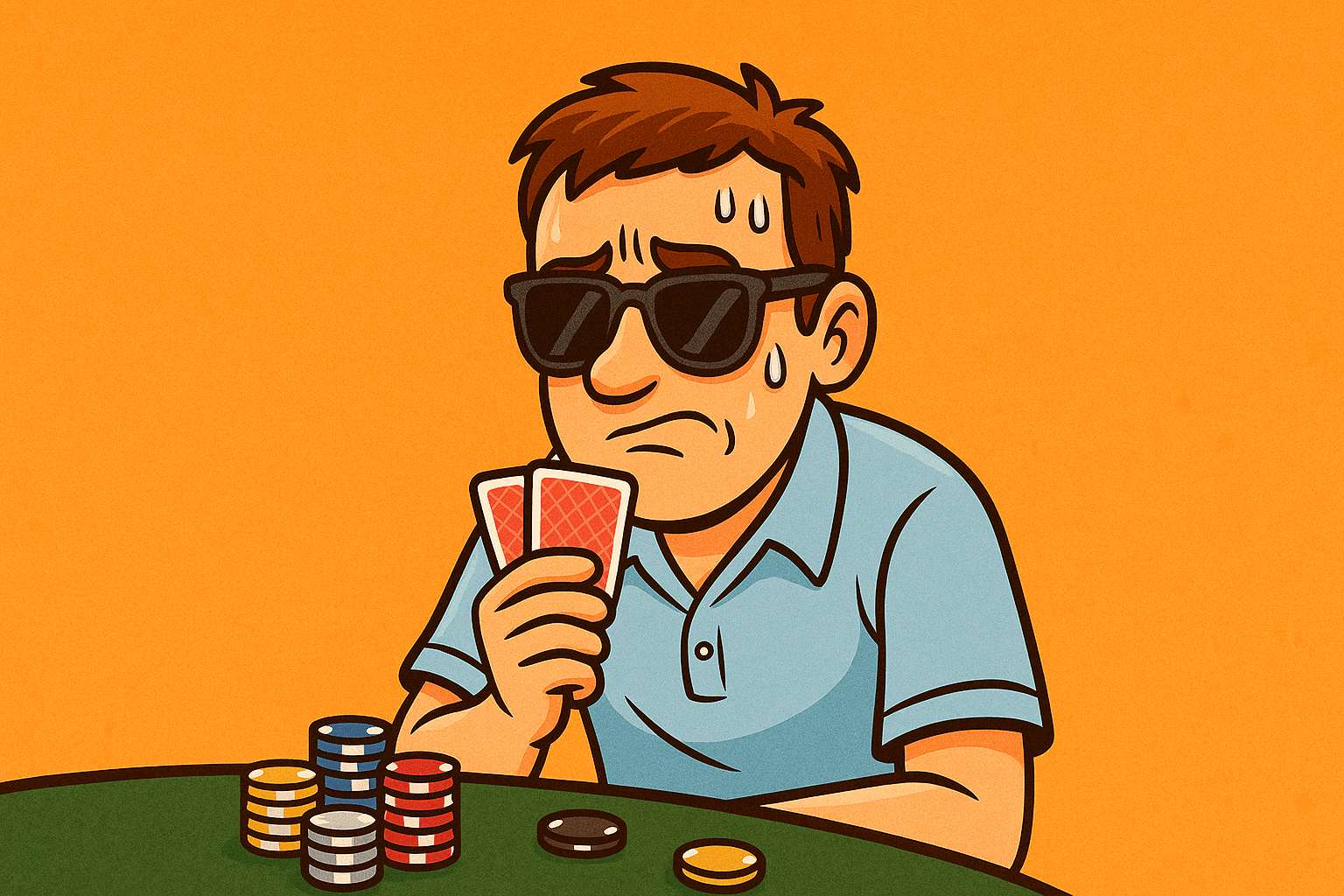
In poker, tilt describes emotions affecting decisions at the table. A lost hand can prompt a player to call or raise for reasons they wouldn’t accept when calm. The useful question isn’t whether you can win the next pot; it’s whether you should keep playing at all.
A bad result and a bad decision aren’t the same thing
Losing a hand doesn’t, by itself, show that you made a mistake or that you’re on tilt. You can make a reasoned decision and lose, or make a poor decision and win. Separate the choice you made from the cards that followed it before trying to explain the result.
Suppose you lose a large pot, then enter the next hand mainly to win money back from the same opponent. That is a hypothetical example of a changed motive, not proof that a particular call is correct or incorrect. Moving to a higher-stakes game to recover the loss changes the amount at risk; it doesn’t repair the earlier result.
Look for a change in your reasons for playing
Anger is an obvious warning, but the label needs more than a visible outburst. Ask what changed: are you chasing the person who beat you, paying less attention to the hand, or abandoning a spending limit? Staying until you get even gives the next result control over when you stop.
Jared Tendler’s poker-tilt lesson distinguishes triggers such as a bad beat, a mistake or boredom, and asks players to describe their own warning signs away from the table. That is an educational account, not a diagnosis or a promise that a written exercise will prevent harm.
Stop adding risk while upset
You don’t owe the table another hand. Don’t increase the stake, buy in again or open another game to reverse a loss. If you planned to finish and now feel unable to leave, treat that difficulty seriously rather than making the next result your permission to stop.
Online, sitting out, leaving a cash table and closing the client are different actions. Check the game’s actual controls; closing a window doesn’t establish that you have left every table or that a tournament entry will be refunded. A tournament can continue while you’re absent, with consequences under its rules. Protecting yourself from further harmful play matters more than recovering an entry fee.
For a live game, tell the dealer you want to stop and follow the room’s procedure. Don’t use the walk away as a threat to another player or provoke someone else into losing control.
A short pause isn’t a guaranteed reset
There is no fixed number of minutes after which this guide can declare you ready to play again. Feeling less angry doesn’t prove that you can stay within a limit, and winning a later hand doesn’t prove that the problem has gone away. Don’t treat a break as a countdown to another deposit.
If you’re tired, upset or drinking, choose an activity without money at risk instead of starting another session to test your concentration. This isn’t a recommendation to practise coping with tilt by gambling online. Easy access to another table or a phone doesn’t make online poker a safer way to learn emotional control.
Review the behaviour away from the game
If you keep a note, record what actually happened: the reason you started, what prompted the urge to continue, the money spent and the point where you ignored your plan. Don’t put account details or another player’s personal information in a public post. The purpose is to describe your own behaviour, not build a story in which somebody else owes you a win.
You can review poker concepts without staking more money. BCP’s pot-odds guide explains one calculation, but knowing the arithmetic doesn’t make it sensible to gamble when you feel unable to stop. This article offers no recovery system, profitable strategy or guarantee of emotional control.
When the issue is more than a frustrating hand
The NHS guidance on gambling harms identifies chasing losses, gambling beyond what you can afford, borrowing to gamble and effects on health or relationships as reasons to seek support. You don’t need to describe the problem as tilt before asking for help.
The NHS page explains support options, including speaking to a GP and gambling-treatment clinics in England, as well as blocking tools and bank gambling-payment blocks. Use those services’ current guidance rather than treating a poker article as treatment. If you need urgent mental-health help, follow the NHS page’s urgent-support link.
Please gamble responsibly. Safer gambling support

Important Disclosure
#AD – Bonus Code Poker is an affiliate of the brands we promote throughout this site. While we strive to maintain accuracy throughout our content, we do receive compensation for this promotion.