
Detailed Map of Premier League Clubs for 2025/26 Season
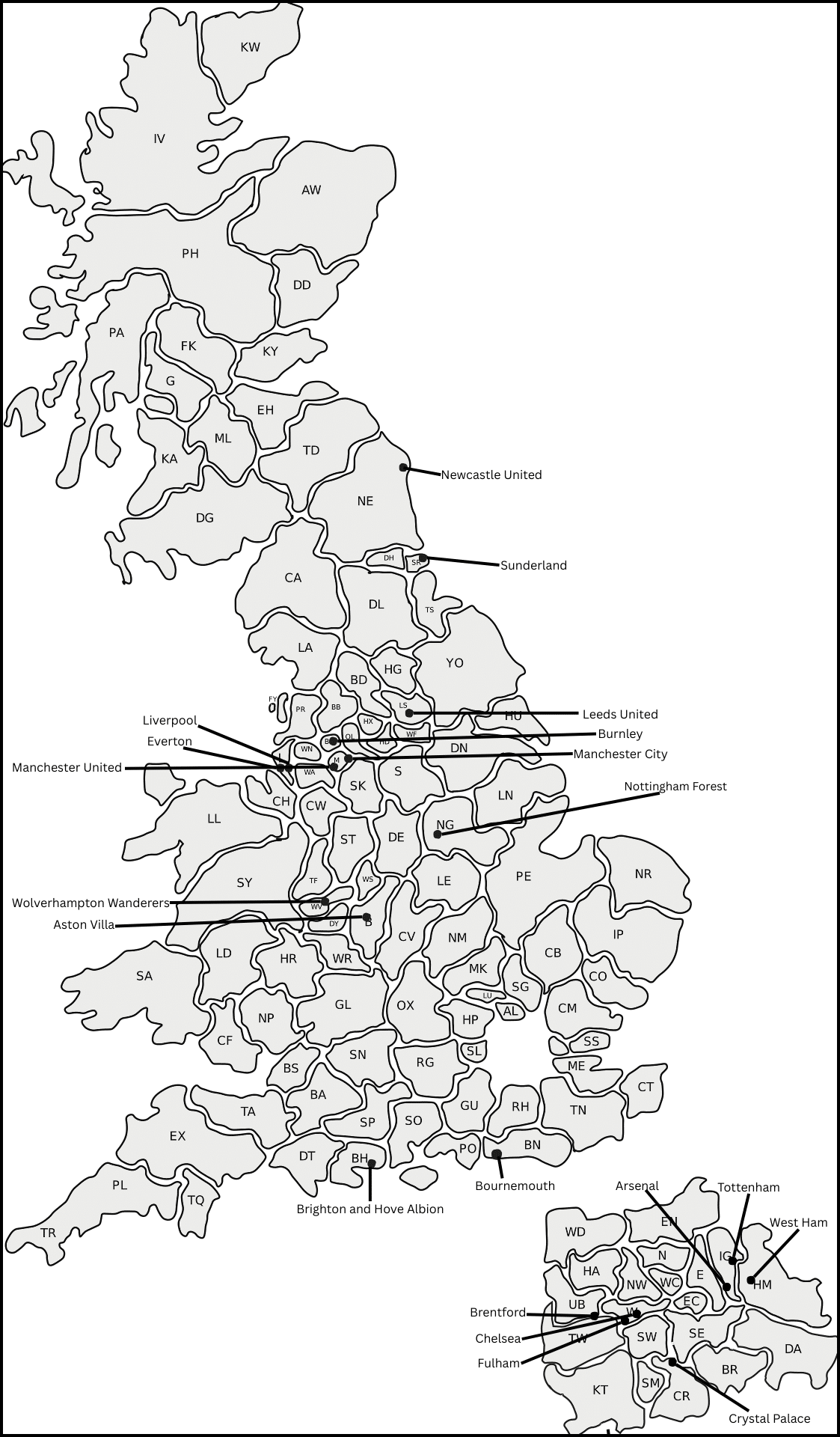
Check out our map of Premier League clubs if you are wondering where your favourites play in the UK!
Curious about the geographic locations of Premier League clubs for the 2025/26 season? Our detailed map of Premier League clubs highlights exactly where each team is based, with club locations clearly shown for easy reference. Discover stadium locations, regional football hotspots, and plan your visit or explore local rivalries. The map offers a visual guide to the layout of the league.
Key Takeaways
- The 2025/26 Premier League map showcases club locations and regional clusters, highlighting local rivalries and football heritage.
- The map serves as a practical tool for fans and travellers, aiding in match visit planning and understanding the geographic distribution of teams across the league.
Overview of Premier League Map for 2025/26 Season
The 2025/26 season brings an exciting update to the Premier League map, a vital tool for fans and travellers alike. This map not only highlights the geographic locations of the clubs but also showcases how the league’s landscape has evolved.
The geographic distribution of Premier League clubs illustrates regional spread and helps fans grasp local rivalries and engagement dynamics.
Over the years, the league’s landscape has changed as different clubs have competed in the Premier League, shaping the current distribution and adding to the league’s rich history.
Analysing the map reveals fascinating clusters of teams in certain regions, vividly depicting areas with a rich football heritage. The map is more than just a visual aid; it’s a gateway to exploring the Premier League’s landscape in detail.
Filtering options allow users to view club locations based on different leagues within the Premier League structure, making it easier to focus on specific tiers and observe team locations and demographic data.
Premier League Clubs Locations
The Premier League map provides a visual representation of club locations, enhancing the experience of following the league. Regional clusters of teams become apparent, highlighting areas with deep football roots and intense rivalries.
For instance, the concentration of clubs in London, including Arsenal, Chelsea, and Tottenham Hotspur, showcases the city’s vibrant football culture.
Filtering by League
Users can filter club locations based on various leagues within the Premier League structure, enhancing navigation and data retrieval by focusing on specific tiers on the site.
Whether you’re interested in the top-tier teams or the newly promoted clubs, the filtering options provide a streamlined way to explore the league’s geographic distribution.
Club Profiles with Stadium Information
To truly appreciate the Premier League map, one must delve into the detailed profiles of each club and their stadiums. This section provides an in-depth look at the home grounds of all 20 Premier League clubs, offering insights into their locations, capacities, and unique features.
Clicking on a club’s icon on the map provides information on the club’s history and stadium details, making the map an invaluable resource for fans.
Arsenal
Arsenal’s home ground, the Emirates Stadium, is a marvel of modern architecture and a symbol of the club’s rich heritage. Located in Holloway, North London, the stadium opened in 2006 and boasts a capacity of 60,704 spectators. The Emirates Stadium features modern facilities, including a sensory room for supporters with disabilities, and is renowned for its excellent sightlines. The ‘Arsenalisation’ project has further enhanced the stadium’s connection to the club’s history, making it a true fortress for the Gunners.
Aston Villa
Aston Villa, based in Aston, Birmingham, plays its home games at the historic Villa Park (capacity 43,205). This iconic stadium has been the club’s home since 1897 and continues to be a fortress for the Villans.
Bournemouth
Bournemouth, participating in the Premier League for the 2025/26 season, hosts its home games at the Vitality Stadium. Located in Bournemouth, this stadium has a seating capacity of approximately 11,364 spectators, making it one of the smaller yet intimate venues in the league.
Brentford
Brentford FC’s Gtech Community Stadium is a modern facility located near Kew Bridge station. This stadium, which replaced Griffin Park, is part of Brentford’s long-term vision for sustainability and community engagement.With a seating capacity of 20,000, it offers a vibrant atmosphere for fans.
Brighton & Hove Albion
Brighton & Hove Albion, a staple in the Premier League, plays its home games at the Falmer Stadium (sometimes called the AMEX). This modern, 31,876-capacity stadium is known for its excellent facilities and passionate fanbase, making it a passionate home for the Seagulls.
Burnley
Burnley play their games at Turf Moor (capacity 21,944). The Clarets have played at Turf Moor continuously since their foundation in 1883. This makes Turf Moor the second-oldest ground still in use in professional football in England.
Chelsea
Chelsea Football Club, situated in Fulham, London, hosts its matches at Stamford Bridge (capacity 40,044). This historic stadium has been home to the Blues since 1905 and is known for its electric atmosphere and rich history.
Crystal Palace
Crystal Palace, located in Selhurst, London, plays its home games at Selhurst Park (25,486 capacity). This stadium is renowned for its passionate supporters and vibrant matchday atmosphere, making it a challenging venue for visiting teams.
Everton
Everton, based in Liverpool, hosts its home games at the Hill-Dickinson Stadium, having moved from their former ground Goodison Park at the end of the 2024/25 season. This brand new stadium has a capacity of 52,769 and is located on Bramley Dock on the banks of the River Mersey.
Fulham
Fulham, located in London, plays its home matches at Craven Cottage. Known for its charming riverside location, Craven Cottage can hold about 25,700 spectators and offers a unique matchday experience.
Leeds United
Leeds United were promoted as Championship winners last season and they play their games at the famous Elland Road, capacity 37,645, which has been the home for the team since the club was formed in 1919.
Liverpool
Liverpool, one of the most storied clubs in the Premier League, hosts its matches at Anfield. Known for its electric atmosphere and significant football events, Anfield is a legendary venue that holds a special place in the hearts of Liverpool fans.
Manchester City
Manchester City, a powerhouse in the Premier League, plays its home games at the Etihad Stadium (52,900 capacity). This modern facility is known for its state-of-the-art amenities and capacity to host large crowds, making it a premier destination for football fans.
Manchester United
Manchester United, one of the most successful clubs in English football, hosts its home games at Old Trafford (capacity 74,197). This iconic stadium, also known as “The Theatre of Dreams,” is famous for its grand history and passionate supporters. However, plans are afoot for United’s owners to develop a new ground for the Red Devils close to the current Old Trafford ground with an even greater capacity.
Newcastle United
Newcastle United, based in Newcastle-upon-Tyne, plays its home games at St. James’ Park (52,305 capacity). This historic stadium is located in the heart of the city and is known for its passionate fanbase and vibrant matchday atmosphere.
Nottingham Forest
Nottingham Forest, a club with a storied history, calls the City Ground (30,455 capacity) its home. Located in West Bridgford, Nottingham, this stadium offers a unique matchday experience and is known for its passionate supporters.
Sunderland
Promoted last season, Sunderland play their games at the Stadium of Light, located on the banks of the River Wear. A UEFA Four-Star stadium, it has a capacity of 49,000 fans and replaced Roker Park as the home for the Black Cats in 1997.
Tottenham Hotspur
Tottenham Hotspur, located in London, hosts its home games at the state-of-the-art Tottenham Hotspur Stadium (capacity 62,850). Known for its modern design and cutting-edge facilities, this stadium is one of the premier venues in the Premier League.
West Ham United
West Ham United, based in Stratford, East London, plays its home games at the London Stadium. With a seating capacity of around 66,000, this stadium offers a vibrant matchday atmosphere and modern facilities.
Wolverhampton Wanderers
Wolverhampton Wanderers, commonly referred to as Wolves, hosts its home matches at Molineux Stadium. This historic stadium, with a capacity of about 32,000, is known for its passionate supporters and unique matchday experience.
How to Use the Premier League Map
Navigating the Premier League map is a straightforward process that enhances the fan experience. Opening the map in a web browser allows users to explore the geographic locations of clubs and their stadiums. The user-friendly design and interactive tools help fans familiarise themselves with the layout and functionalities.
Clicking on team names or markers provides information about each club’s history, current statistics, and stadium details, transforming the map into a dynamic resource for Premier League enthusiasts.
Benefits of Using a Premier League Map
A Premier League map offers several practical benefits, making it an essential tool for fans and travellers. The map displays clubs across various regions, showcasing the geographic diversity of the league. This visualisation helps fans understand the regional dynamics and the density of Premier League teams in specific areas.
The map also provides real-time data about matches and team performance, enhancing the user experience. Understanding the geographic territories of clubs helps fans appreciate regional rivalries and support their favourite teams more effectively.
Planning Match Visits
A Premier League map is an invaluable tool for planning match visits, making it easy to locate stadiums for your favourite teams. Whether you’re planning a road trip to catch multiple games or simply visiting a nearby stadium, the map helps in determining the most efficient travel routes.
Displaying the proximity of stadiums helps fans conveniently plan visits to multiple venues in one trip, ensuring a seamless and enjoyable matchday experience.
Understanding Geographic Distribution
Understanding the geographic distribution of Premier League clubs offers insights into the league’s diversity and regional appeal. The map highlights significant clusters in major cities like London, where clubs such as Arsenal, Chelsea, and Tottenham Hotspur are located.
In contrast, other clubs are spread across suburban and rural areas, showcasing the Premier League’s extensive reach. This geographic spread underscores the league’s wide appeal and the importance of regional rivalries in English football.
Summary
In summary, the detailed map of Premier League clubs for the 2025/26 season is a comprehensive tool that enhances the fan experience. By providing a visual representation of club locations, the map helps fans understand the regional dynamics and rivalries that make the Premier League so captivating. The interactive features and filtering options further enrich the usability of the map, making it an essential resource for both avid fans and casual viewers.
Using the Premier League map, fans can efficiently plan match visits, explore club profiles, and appreciate the geographic distribution of teams across England. Whether you’re a local supporter or a travelling enthusiast, this map offers a deeper connection to the league and its storied history. Embrace the journey and explore the Premier League like never before.
Frequently Asked Questions
How can fans use the Premier League map to plan match visits?
Fans can effectively utilise the Premier League map to identify stadium locations, plan travel routes, and organise visits to nearby venues, thus optimising their match day experiences.
How does the Premier League map help in understanding the geographic distribution of clubs?
The Premier League map clearly illustrates the geographic distribution of clubs, allowing fans to observe regional clusters and understand the diversity within the league. This visual representation enhances appreciation for the regional dynamics of English football.
Please gamble responsibly. Safer gambling support

Important Disclosure
#AD – Bonus Code Poker is an affiliate of the brands we promote throughout this site. While we strive to maintain accuracy throughout our content, we do receive compensation for this promotion.