
How to tell family about gambling harm: preparing the conversation
Prepare to talk about gambling harm: choose someone you trust, explain the impact, ask for specific help and find independent UK support before or after the conversation.
If gambling is affecting your money, relationships or wellbeing, you can ask for help before you have a diagnosis or know exactly what to say. Telling a trusted person can be one step; it does not have to be a single conversation with the whole family. This UK guide concerns talking about your own gambling, not confronting someone else about theirs.
Choose someone you trust, and prepare at your own pace
GamCare’s guidance for people experiencing harm recommends a trusted person and a calm, private time. It also says an adviser can help you prepare. You do not need to complete research, arrange treatment or produce a perfect recovery plan before making that first call.
Think about who you would feel comfortable speaking to and what you want from the conversation. If speaking to family feels unsafe or is not possible, start with a trained adviser rather than force a meeting alone. This article cannot assess your personal safety or decide who should be told.
Write down the points you want to explain
The NHS guide to talking about mental health suggests making notes, allowing enough time and explaining the support you would like. You do not have to say everything in the first conversation.
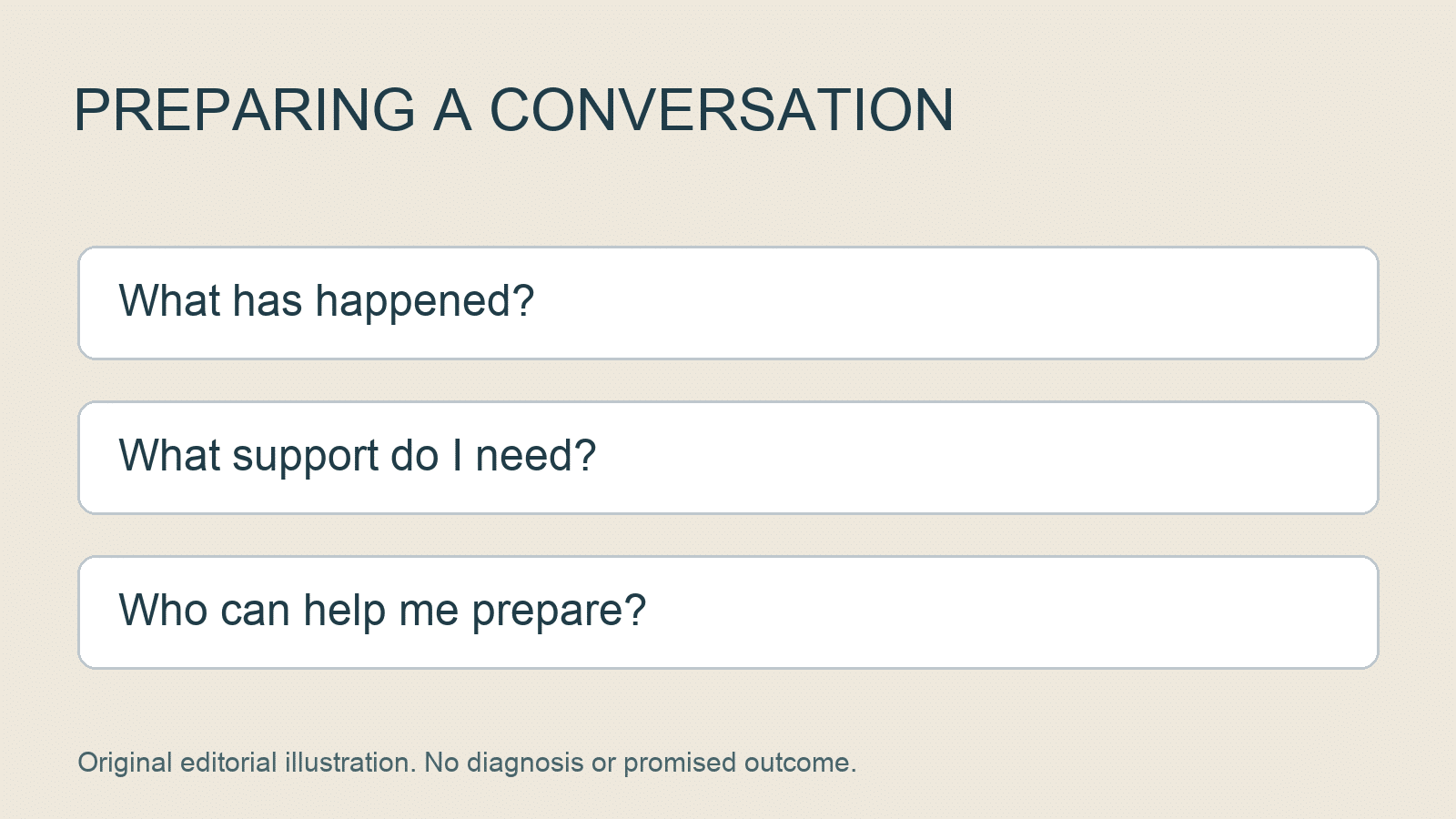
Your notes could separate what has happened, how it is affecting you and what help you are asking for. Where household money is affected, distinguish what you know from amounts you still need to check. Keep account statements and identifying details private; do not post them in an article comment or send them to BCP.
An example opening, not a prescribed script, is: “My gambling is affecting me, and I need help. Could you listen while I explain what has happened?” Use words that fit your situation. You can say you are worried about your gambling without claiming a diagnosis.
Be clear about the impact and the help you need
Explain the effects you can identify, such as unpaid bills, hidden spending or strain in the relationship, without treating a possible future win as a solution. Ask for something specific: listening, helping you contact support, or sitting with you while you organise information for a debt adviser. Do not assume another person can take on all those roles.
Acknowledging the impact on others is different from asking for immediate forgiveness. You can listen to their concerns and answer what you know without promising that one conversation will restore trust or that you will never struggle again. BCP is not a counselling service and cannot promise a particular response.
Allow for their response and their own support needs
The NHS notes that not everyone will feel able to provide the support requested. If the first person cannot help, consider another trusted person or a professional service. Do not make their response the condition for seeking help.
For a partner or relative who wants guidance about your gambling, GamCare’s separate guide for affected others covers safe preparation, expressing concern without blame and listening. It also makes clear that support is available to the person affected, not only the person gambling. That is a different perspective from the disclosure you are preparing.
Agree a practical next step, not a promise of winnings
A next step might be contacting the helpline, arranging a GP conversation or obtaining debt advice. The NHS gambling-harm page also describes bank gambling blocks, self-exclusion and blocking software. It advises dealing with debts and not viewing gambling as a way to make money. Check the current service information rather than assume one tool blocks every route.
If closing an operator account is part of your plan, BCP’s UK account-closure guide distinguishes ordinary closure from self-exclusion. The guide to tilt and stopping explains why chasing losses is not a recovery plan. Neither requires opening a new account or using an offer.
Agree whether and when to talk again. Keep any update factual: what you have done, what remains difficult and where further help is needed. GamCare says rebuilding trust can take time; a milestone is not proof that all harm has ended.
Where to get help before or after the conversation
The National Gambling Helpline, run by GamCare, is free and confidential: 0808 8020 133, available 24 hours a day, seven days a week. It supports people gambling and people affected by someone else’s gambling. GamCare also offers online contact options.
The NHS describes specialist gambling clinics in England, with self-referral or help from a GP to find local services. If you need urgent mental-health help, use the NHS urgent-help page rather than wait for a family conversation. This guide is general information, not a diagnosis, treatment plan or emergency service.
Please gamble responsibly. Safer gambling support
Important Disclosure
#AD – Bonus Code Poker is an affiliate of the brands we promote throughout this site. While we strive to maintain accuracy throughout our content, we do receive compensation for this promotion.